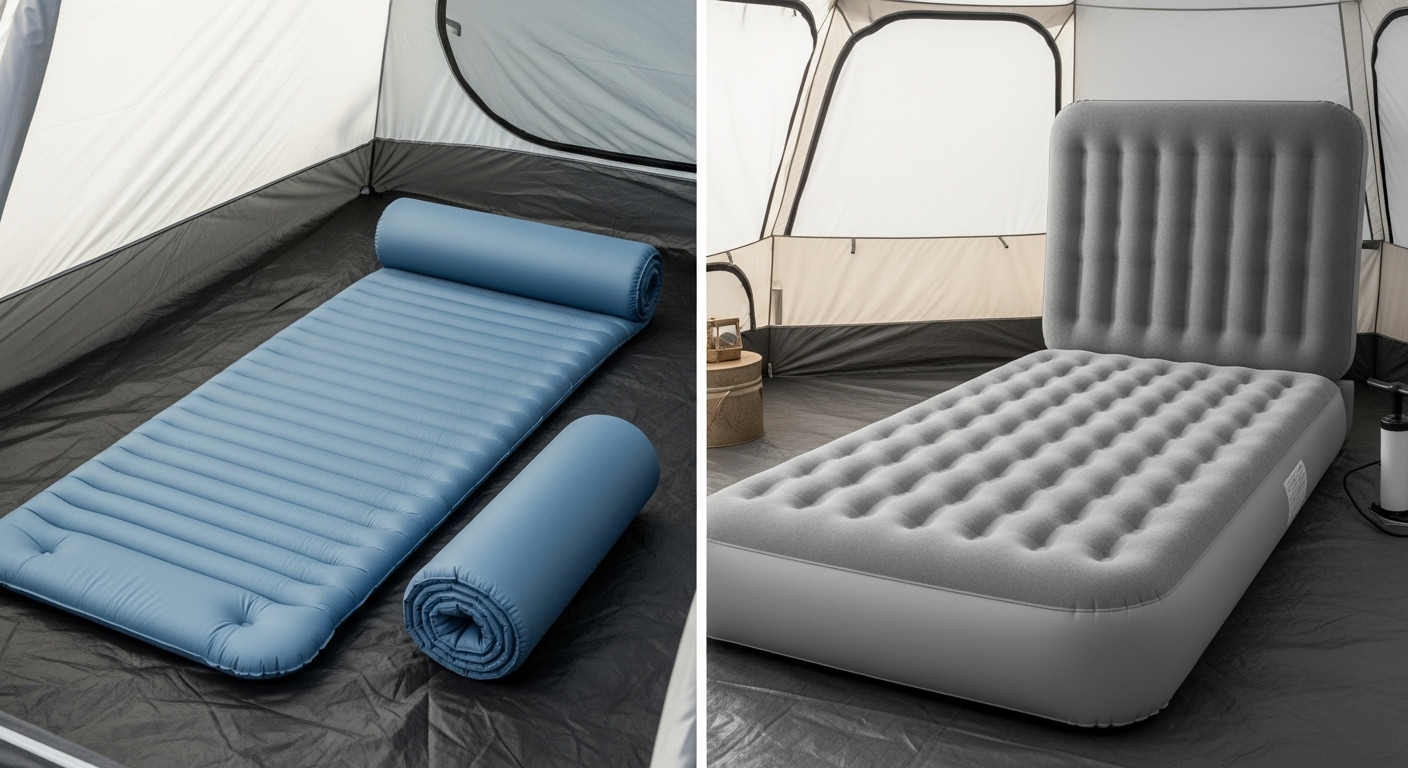
Outdoors, “sleeping better” usually comes down to three things: warmth, support, and how much hassle you’re willing to deal with. A plush air mattress can feel amazing… until the temperature drops and you wake up cold, or it slowly sags by 3 a.m. A sleeping pad can look thin… but often wins where it counts.
Here’s the real comparison.
Sleeping Pad (foam or inflatable camping pad)
What it feels like outside
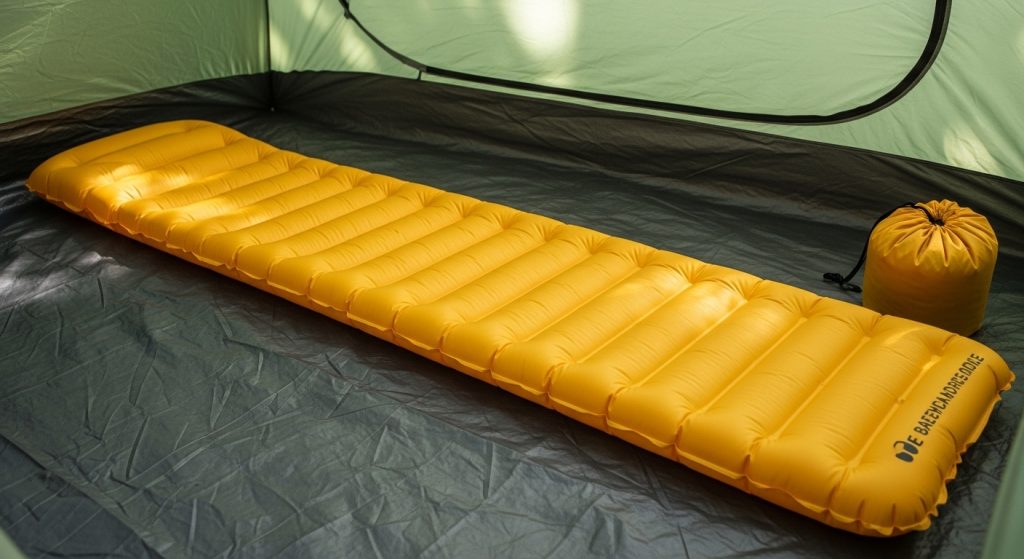
A good sleeping pad is designed for the ground: it insulates you, smooths out small rocks/roots, and stays stable through the night. Inflatable pads can feel surprisingly comfortable once you dial in the firmness.
Pros
- Warmer for its size (key outdoors): Many pads are built to block ground cold better than basic air mattresses.
- More reliable overnight: Less “slow sag” if it’s a quality valve and you set firmness right.
- Lighter + packs smaller: Especially important if you hike even a little.
- Fewer “bounce” issues: Pads don’t wobble as much when you shift positions.
Cons
- Not as plush as a tall mattress: Side sleepers may feel pressure points on thin pads.
- Inflatables can puncture: You’ll want a patch kit (most are easy to fix).
- Foam pads are bulky: Even if they’re bombproof, they take space.
Best for
- Backpacking, walk-in campsites, and anyone who prioritizes warmth + packability
- Cooler nights where insulation matters
Air Mattress (taller, more “bed-like”)
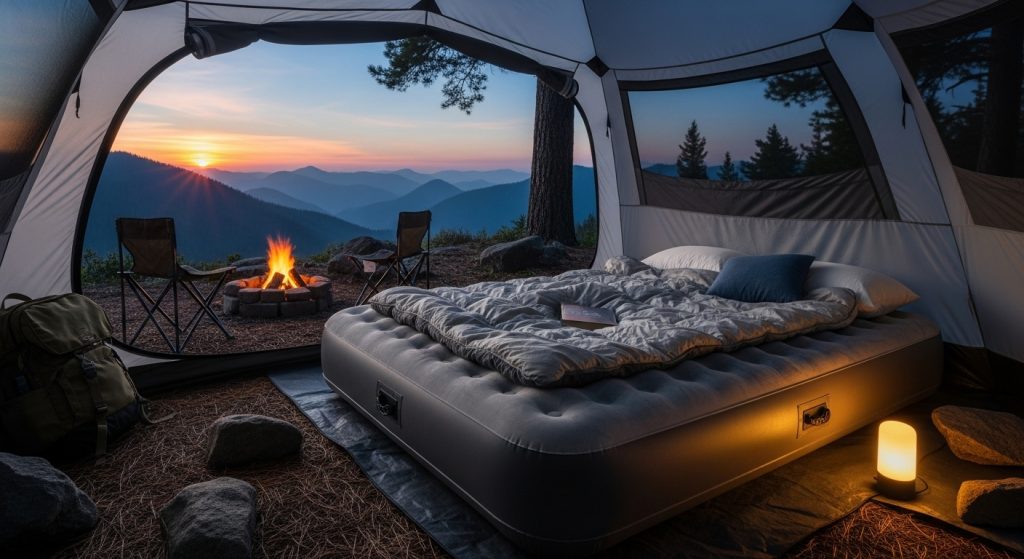
What it feels like outside
At first, air mattresses can feel like a real bed—especially for car camping. But outdoors they’re more sensitive to cold air temps and ground conditions, and they can be finicky if the ground isn’t perfectly flat.
Pros
- Plush comfort: Great for side sleepers who want cushioning.
- Higher off the ground: Easier getting in/out, feels more like home.
- Good for car camping: When weight and pack size aren’t a big deal.
Cons
- Can sleep colder: Air inside the mattress cools down overnight, and many people feel the chill from below.
- Pressure changes overnight: Temperature drops = mattress feels softer/sags, even if it’s not leaking.
- More hassle: Pump, more bulk, more setup time, more things to fail.
- Bouncier + less stable: If you move, it moves—especially for couples.
Best for
- Car camping in mild weather
- Campers who value “bed-like” height and softness over simplicity
Head-to-head: what matters most outdoors
1) Warmth (most important)
✅ Sleeping pad wins in most real outdoor conditions.
Even if the air mattress feels softer, many campers wake up colder on it—unless they add insulation.
If you insist on an air mattress: put a foam pad or insulated blanket on top of it.
2) Comfort for side sleepers
✅ Often air mattress wins for plushness.
But a thicker inflatable sleeping pad can compete without the cold-air problem as much.
3) Reliability through the night
✅ Sleeping pad wins most of the time.
Air mattresses are more prone to overnight “softening” and can feel unstable on uneven ground.
4) Setup & packability
✅ Sleeping pad wins (especially inflatable camping pads).
Air mattresses take more space, need a pump, and are a bigger pain to store.
5) Couples sleeping together
- If you share a bed, air mattresses can feel bouncy and transfer movement.
- Two separate sleeping pads often sleep better (less movement transfer), but some people prefer one shared surface.
The optimal choice (straight answer)
✅ For most outdoor trips: Sleeping pad sleeps better outdoors.
Because warmth + stability + simplicity matter more outside than “bed height.”
✅ When an air mattress makes more sense:
Pick an air mattress if you’re car camping, the weather is mild, and you really want that plush “home bed” feel—but plan to add insulation (pad/blanket) on top to avoid sleeping cold.
Quick “sleep better tonight” tips (either way)
- Use a sleeping pad with a good insulation rating (especially spring/fall).
- For air mattresses: add a foam pad or quilt on top and don’t overinflate.
- Choose level ground and clear rocks/roots first—comfort starts with site selection.
- Keep a small repair kit (patches) if anything inflatable is involved.