Most “3-season” sleeping bags look warm on paper—until you hit a windy 40°F night and realize the rating was… optimistic. The bags below are solid picks for real camping, and I’ll call out who they actually feel warm for, not just what the label says.
Before you buy: how sleeping bag ratings really work
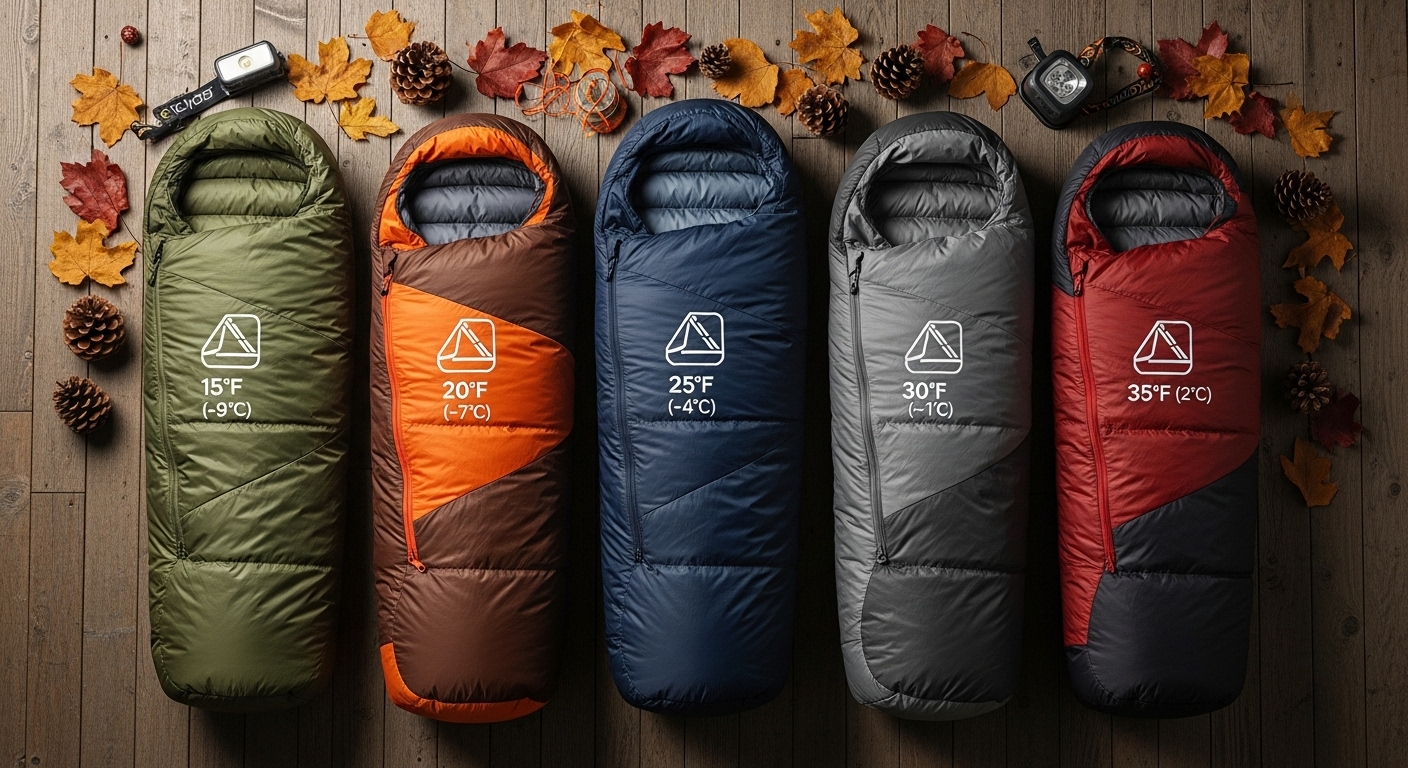
- “Comfort” vs “Limit”: Many brands advertise the lower “limit” number. Most people sleep closer to the comfort range.
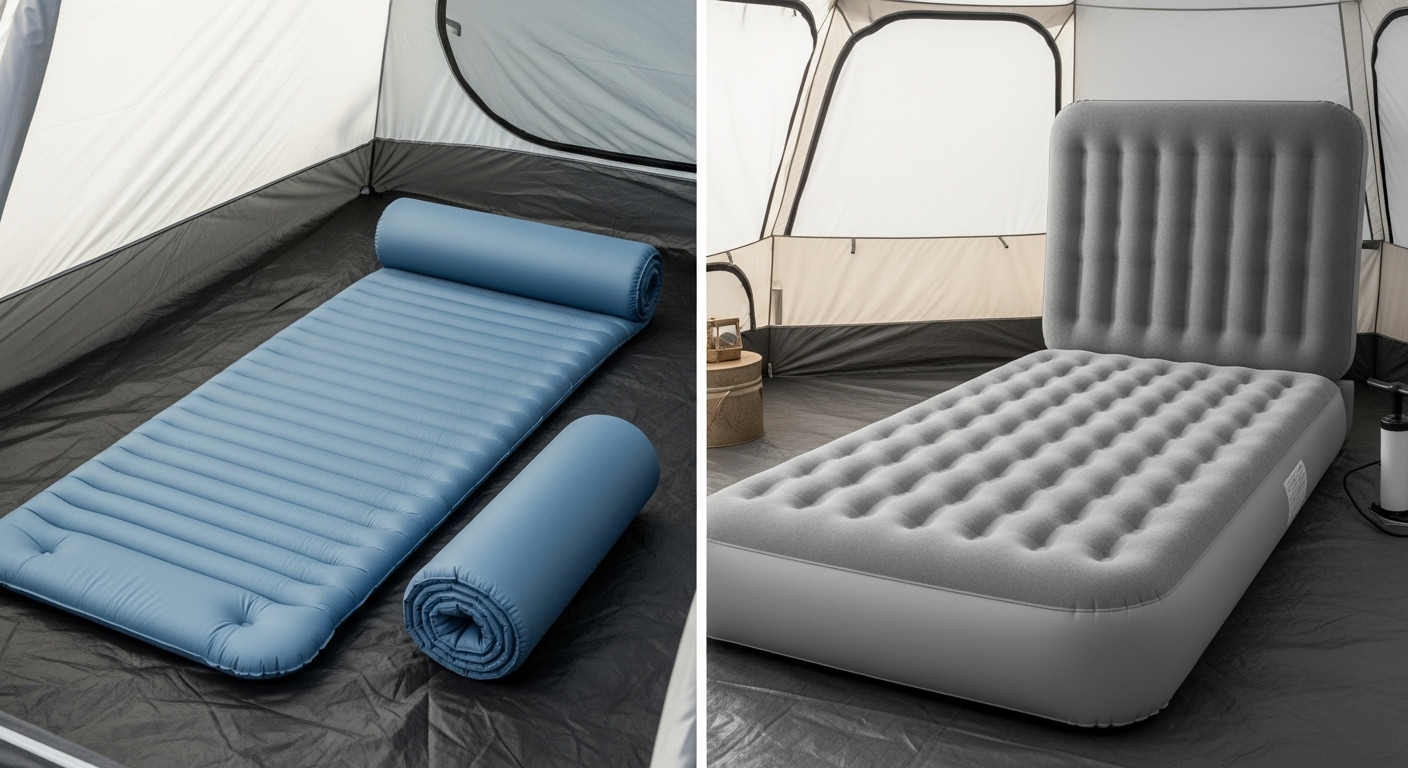
- Your sleeping pad matters: A warm bag on a thin pad still feels cold (ground steals heat fast).
- Warm sleeper vs cold sleeper: If you sleep cold, treat the listed rating as too low and size up warmth.
1) VENTURE 4TH Backpacking Sleeping Bag (Lightweight, Warm/Cold Weather)
What it’s like in real use
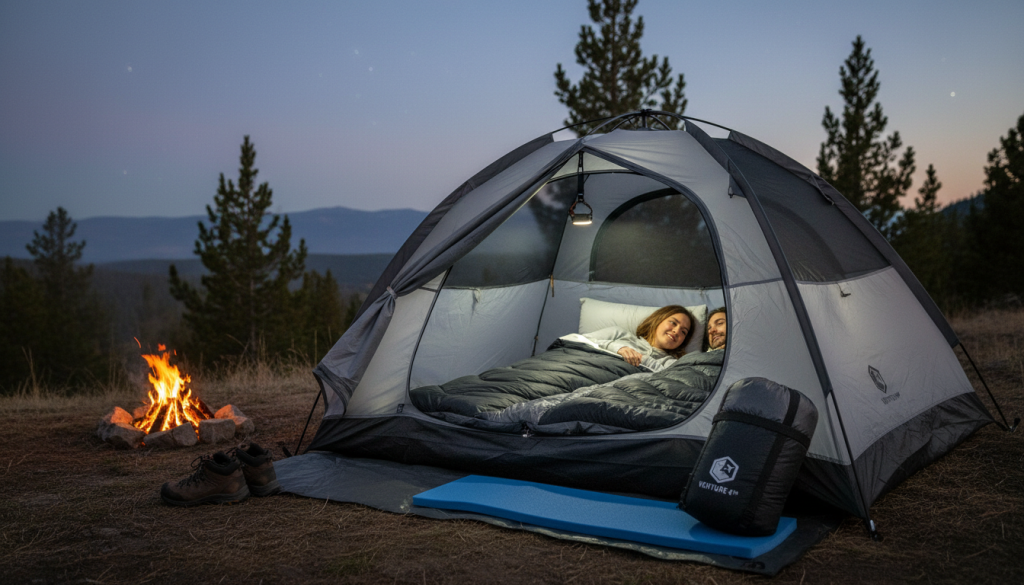
This is the classic budget-friendly camping bag style—roomy enough for comfort, warm enough for mild-to-cool nights, and easy for weekend trips.
Standout features
- Practical “starter” design for general camping
- Usually a bit roomier than tight mummy bags (comfort win)
- Packs down reasonably for car camping / short hikes
Pros
- Good value for casual 3-season camping
- Comfortable for side sleepers who hate super-tight mummy bags
- Easy to use, not fussy
Cons
- Temperature rating can feel optimistic for cold sleepers
- Bulkier than down when packed
- Less efficient warmth-to-weight than premium bags
Best for: casual campers, budget builds, mild spring/fall nights.
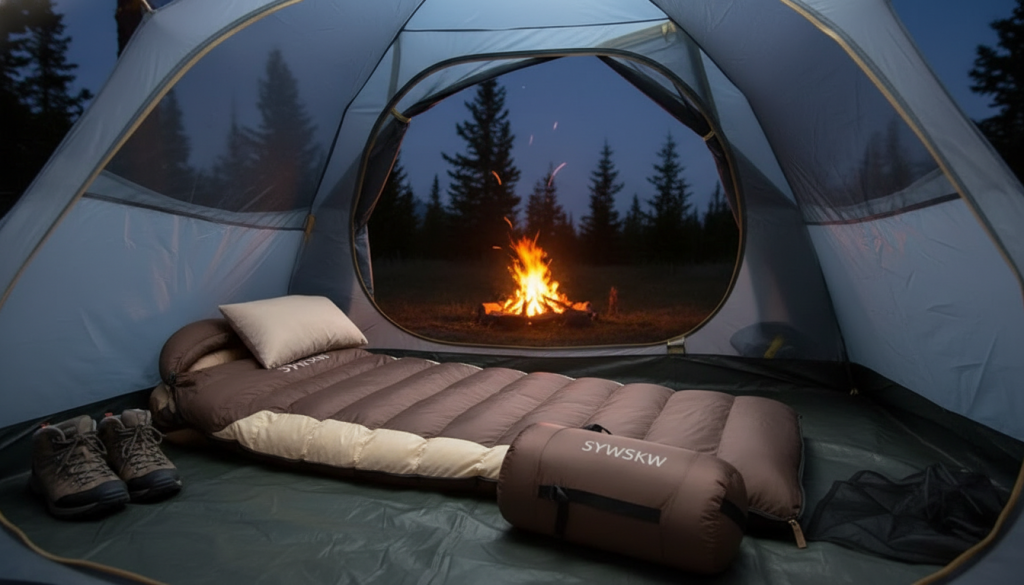
2) Down Sleeping Bag with Pillow (Ultralight, 680 FP Down)
What it’s like in real use
Down is hard to beat for warmth without bulk. This style is ideal if you want a smaller packed size and a warmer feel for the weight—especially for backpacking or minimalist kits.
Standout features
- Down insulation = excellent packability and warmth-to-weight
- Comfortable warmth for cool nights when paired with a decent pad
- Often feels “cozier” because down loft wraps around you well
Pros
- Best packability on this list
- Great for backpacking and tighter storage
- Warms up fast and feels less clammy than some synthetics
Cons
- Down needs a bit more care (keep it dry, store uncompressed)
- If you camp in wet conditions often, synthetic can be less stressful
- Price-to-performance varies by brand/model
Best for: backpackers, people who want compact packing + reliable warmth (with proper pad).
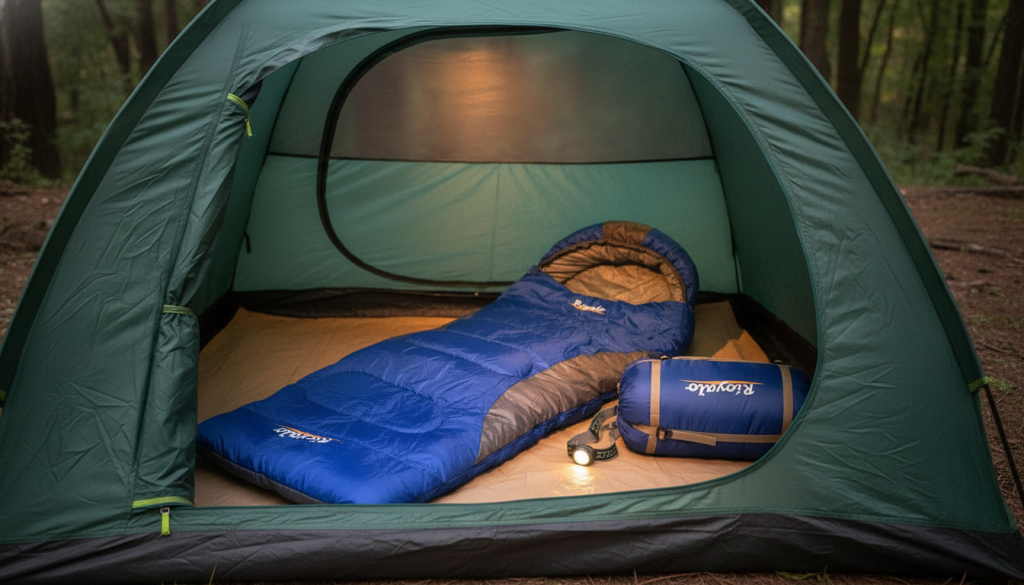
3) 0-Degree Winter Sleeping Bag (450GSM, “Hoodie” style)
What it’s like in real use
This is a warmer, heavier bag aimed at cold nights. For true 3-season camping, it’s usually more warmth than you need—unless you camp in colder regions or you sleep cold.
Standout features
- Built for colder temps than typical “3-season” bags
- Heavier insulation that’s forgiving if your setup isn’t perfect
- Hooded design helps trap heat (big difference on chilly nights)
Pros
- Best choice here for cold sleepers or shoulder-season camping
- More margin for error if wind picks up or temps drop
- Cozy, “bundled-up” feel
Cons
- Bulkier and heavier to pack
- Can feel too warm on mild nights
- Synthetic insulation takes more space than down
Best for: cold sleepers, early spring/late fall camping, higher elevations.
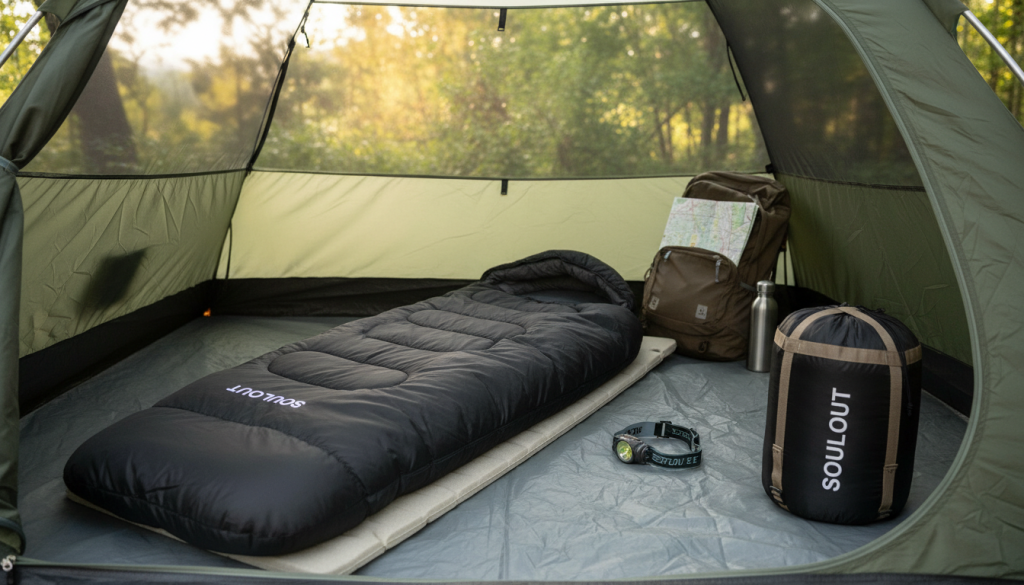
4) 3–4 Season Sleeping Bag (Lightweight, Warm/Cold Weather, Compression Sack)
What it’s like in real use
This is the “balanced” style most campers should start with: warm enough for cool nights, not ridiculously bulky, and flexible across a wide range of weekend conditions.
Standout features
- Good all-around warmth for typical 3-season use
- Usually a straightforward mummy/semi-mummy shape for better heat retention
- Includes a compression sack for easier packing
Pros
- Best “middle ground” for most campers
- Warmth feels more realistic than many ultra-cheap summer bags
- Versatile for car camping and light backpacking
Cons
- Still not as compact as down
- If you’re tall/broad-shouldered, fit matters (tight bags feel colder)
- Ratings still depend heavily on your sleeping pad
Best for: most 3-season campers who want one bag that works in many situations.
Non-hype comparison: which one is actually “most accurate” for 3-season?
- Most reliable warmth for cold sleepers: #3 (0-degree winter bag)
- Best warmth-to-pack size: #2 (down bag)
- Best budget starter: #1 (VENTURE 4TH)
- Best balanced 3-season pick: #4 (3–4 season bag)
The optimal choice (best overall for most people)
✅ Best Overall for 3-Season Camping: #4 3–4 Season Sleeping Bag
It hits the sweet spot: warm enough for cool nights, manageable bulk, and flexible for most spring–summer–fall weekends.
If you sleep cold or camp in colder areas
Go #3 for extra safety margin—you’ll appreciate it at 3 a.m.
If pack space matters (backpacking / small car / minimalist)
Pick #2 (down) for the best “warmth without bulk” experience.
Quick tips to make any bag feel warmer (and match the rating)
- Use a warmer sleeping pad (this is the #1 upgrade).
- Wear dry base layers + warm socks (never sleep in damp clothes).
- Eat a small snack before bed (your body burns fuel to stay warm).
- Don’t overtighten the bag—compressed insulation = less warmth.
- Vent if you’re sweating (sweat = cold later).