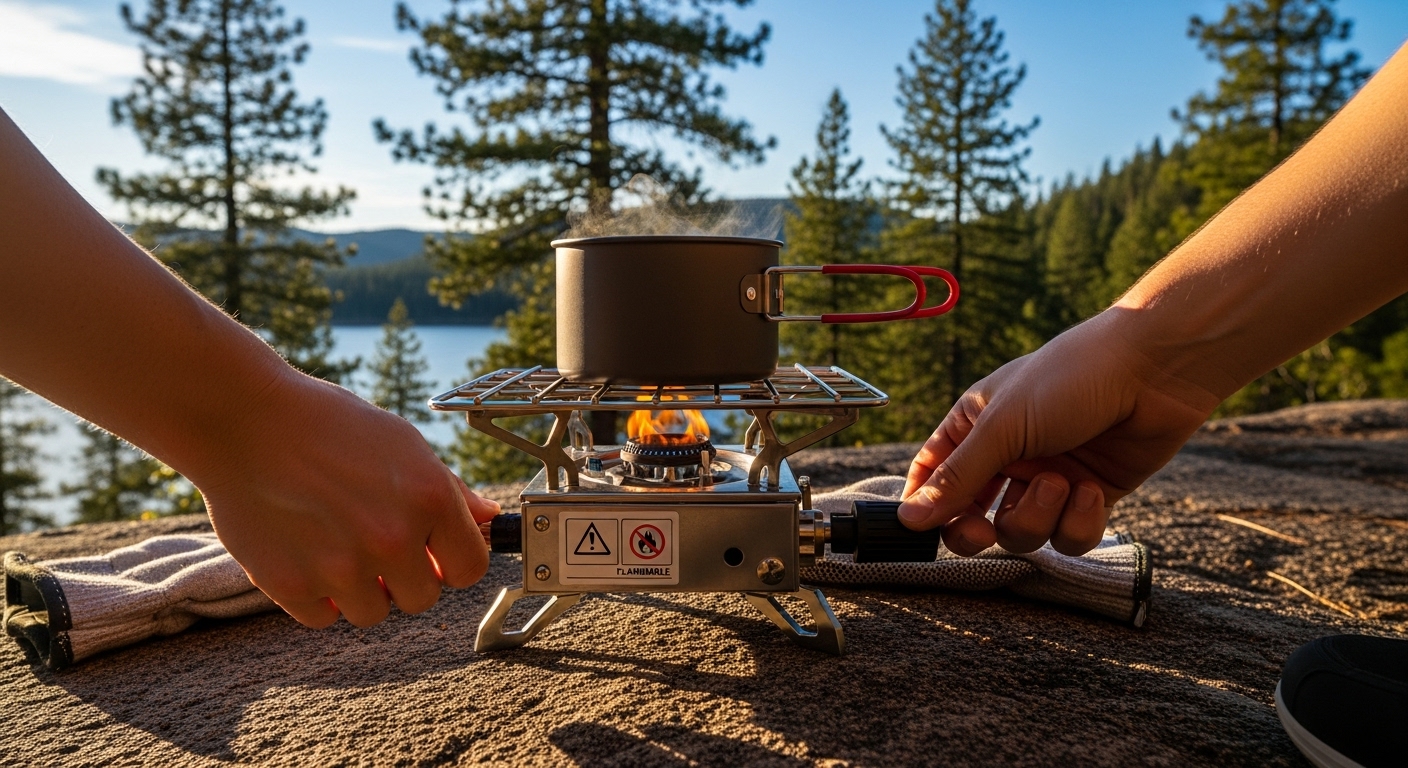
A camping stove is simple—until it isn’t. Most stove accidents come from three things: poor ventilation, fuel leaks, and wind/heat mismanagement. The good news: a few habits make stove use extremely safe and way less stressful.
Below is a practical, step-by-step guide you can follow every time you cook outdoors.
1) Ventilation: where (and where NOT) to cook
Always cook in moving air
- Cook outside or in an open, well-ventilated area.
- The safest setup is open air + stable surface + wind protection that doesn’t trap heat.
Never cook in these places
- Inside a tent (even with doors open)
- Inside a vehicle
- Inside enclosed shelters with poor airflow
Why: stoves can produce carbon monoxide (CO), especially if the flame is starved for oxygen or shielded too tightly. CO can build up fast in enclosed spaces.
Better option: cook under an awning/tarp only if the sides are open and airflow is strong—and keep the stove away from fabric.
2) Setup checklist (30 seconds that prevents most problems)
Pick the right spot
- Flat, stable ground (or a sturdy camp table)
- Away from dry grass, leaves, and tent walls
- Not where people walk by (trip hazard)
Stabilize your stove and cookware
- Make sure pot supports are fully locked open
- Center the pot/pan
- Avoid oversized cookware on tiny backpacking burners (tippy = dangerous)
Tip: If the stove wobbles, fix that first. Don’t “hope it’s fine.”
3) Leak checks (before you light it)
For canister stoves (isobutane/propane mix)
- Inspect the canister threads and rubber gasket (O-ring) if visible.
- Attach the stove straight—don’t cross-thread.
- Tighten by hand until snug (don’t over-tighten).
- Listen and smell:
- Hissing = leak
- Fuel smell = leak
If you suspect a leak: turn everything off, move away, detach, and try again with a clean thread/gasket. If it still leaks, don’t use it.
For propane hose systems and tabletop stoves
- Check hose connections are snug
- Look for cracks, dry rot, or bent fittings
Soap test (best practice):
- Mix a little dish soap + water.
- Brush it on connections.
- If you see bubbles growing, you have a leak—do not light.
4) Lighting the stove safely
Safe lighting routine
- Make sure the control knob is OFF.
- Open fuel slowly (small turn).
- Ignite using built-in igniter or a lighter/match.
- Adjust to the flame you want.
What a healthy flame looks like
- Mostly blue, steady, not sputtering
- No strong fuel smell during normal burn
If the flame is yellow/orange: you may have wind disruption, dirty burner, or oxygen starvation—fix ventilation and wind shielding.
5) Wind tips (without creating a heat trap)
Wind is the #1 reason stoves burn inefficiently and can also create unsafe conditions if you block it the wrong way.
The right way to handle wind
- Use natural barriers: your car, a rock, a log, a picnic table leg (without enclosing the stove)
- Rotate the stove so the wind hits the back side
- Use a windscreen only if it’s designed for your stove type
The dangerous mistake: enclosing the stove
Do not wrap a tight windscreen around a canister stove where the canister sits close to the flame. Trapped heat can overheat the fuel canister.
Safer windscreen approach
- Keep airflow gaps.
- Keep the canister away from reflective heat.
- If it feels “too hot to touch” near the canister area, stop and reconfigure.
6) Cooking habits that prevent burns and flare-ups
Avoid flare-ups
- Don’t cook over high flame with lots of oil in a light pan
- Keep food moisture in mind (water drips can cause splatter)
- Keep a lid nearby to smother small flare-ups
Handle cookware safely
- Use pot handles carefully (they get hot fast)
- Keep handles turned inward so you don’t bump them
- Use gloves or a pot gripper when needed
Never leave the stove unattended
Even “just a minute” is how spills and tip-overs happen.
7) Shutting down safely (do this every time)
- Turn the stove OFF fully.
- Let it cool before packing.
- Detach fuel only after it’s cool (for canister stoves).
- Store fuel away from heat and direct sun.
Fuel storage tips
- Don’t leave canisters in a hot car in direct sun.
- Keep fuel upright and protected from punctures.
Quick safety checklist (printable mindset)
✅ Cook in open air
✅ Stable surface, clear area
✅ Check connections (listen/smell, soap test if needed)
✅ Healthy blue flame
✅ Wind protection without enclosing the canister
✅ Never leave it unattended
✅ Cool down before packing