A portable power station can make camping way more comfortable—phones charged, lights running, maybe even a small fan. But it can also become the fastest way to trip breakers, damage gear, or create a safety issue if you ignore wattage and weather. This guide covers the practical stuff that actually matters at camp: wattage limits, smart charging habits, and rain protection.
1) Know your power station’s limits (before you plug anything in)
Understand these 3 numbers
- Battery capacity (Wh): How much energy it stores. Higher Wh = longer runtime.
- Continuous output (W): What it can supply steadily.
- Surge/peak output (W): Short burst power for motors (fridges, pumps).
Rule of thumb: Your device’s wattage must be below the station’s continuous output. If a device has a motor or compressor, you also need enough surge headroom.
Quick examples (common camping loads)
- Phone charging: usually low draw
- LED lantern/string lights: low draw
- Laptop: moderate draw
- Small fan: low-to-moderate draw
- Heated blanket, space heater, hair dryer, electric kettle: often high draw and can overload smaller stations
Tip: If your station has a display showing watts, use it. It’s the easiest way to stay safe.
2) Build a safe “camp power plan” (so you don’t run out at night)
Prioritize essentials first
At camp, the most valuable power is usually:
- Lighting
- Phone (maps, emergency, photos)
- Headlamp charging
- Optional comfort devices (fan, speaker)
Avoid draining your battery early on convenience items you don’t need.
Use the right ports
- USB ports for phones and small electronics (most efficient).
- DC outputs if your device supports it (often efficient).
- AC outlets only when you truly need AC (least efficient due to inverter losses).
Real-world tip: If you can charge something via USB-C instead of AC, do it. You’ll usually get more runtime.
3) Prevent overloads and overheating
Don’t exceed output
Overload happens when you plug in too much at once—especially on AC.
- Start big devices one at a time.
- If the station shuts off, unplug everything and reset.
Keep airflow around the unit
Power stations need ventilation. Heat is the enemy of batteries and inverters.
- Don’t bury it in a sleeping bag, cooler compartment, or sealed tote.
- Keep vents clear and avoid placing it on thick blankets.
Keep it out of direct sun
Sun + battery = heat build-up.
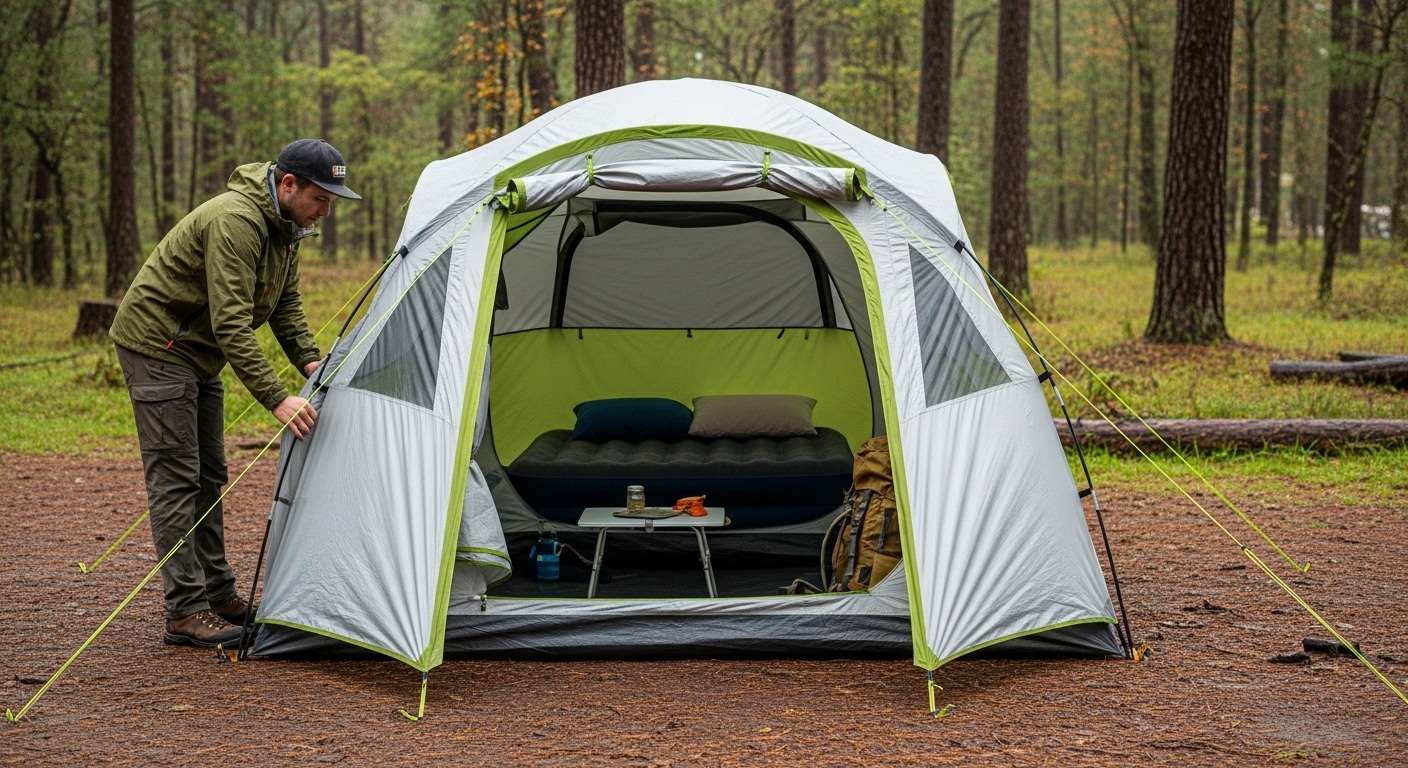
- Put it in shade, under a table, or inside a ventilated tent vestibule (not the sleeping area).
4) Charging safely (car charging, solar charging, and topping off)
A) Charging from a vehicle
- Only charge while the car is running if you’re worried about draining the car battery.
- Use quality cables and avoid loose connections.
- Don’t run long extension cords that people can trip over.
B) Charging with solar
Solar works best when you treat it like a daytime “top-off,” not a magic refill.
- Angle the panel toward the sun; flat placement is often worse.
- Move it as the sun shifts (even small adjustments help).
- Expect reduced input in clouds and shade.
Best practice: Use solar to charge the power station steadily, then charge devices from the station.
C) Don’t “cycle to zero”
It’s safer and better for battery life to avoid running it down completely.
- Try to stay above low reserve when possible, especially overnight.
5) Rain protection and water safety (this is where people mess up)
Key truth: “Water-resistant” is not “waterproof”
Most portable power stations are not meant to be rained on. Water + AC outlets is a bad combo.
How to protect it in rain
- Move it under hard cover: car trunk (open but sheltered), awning, tarp roof, or inside a tent vestibule with airflow.
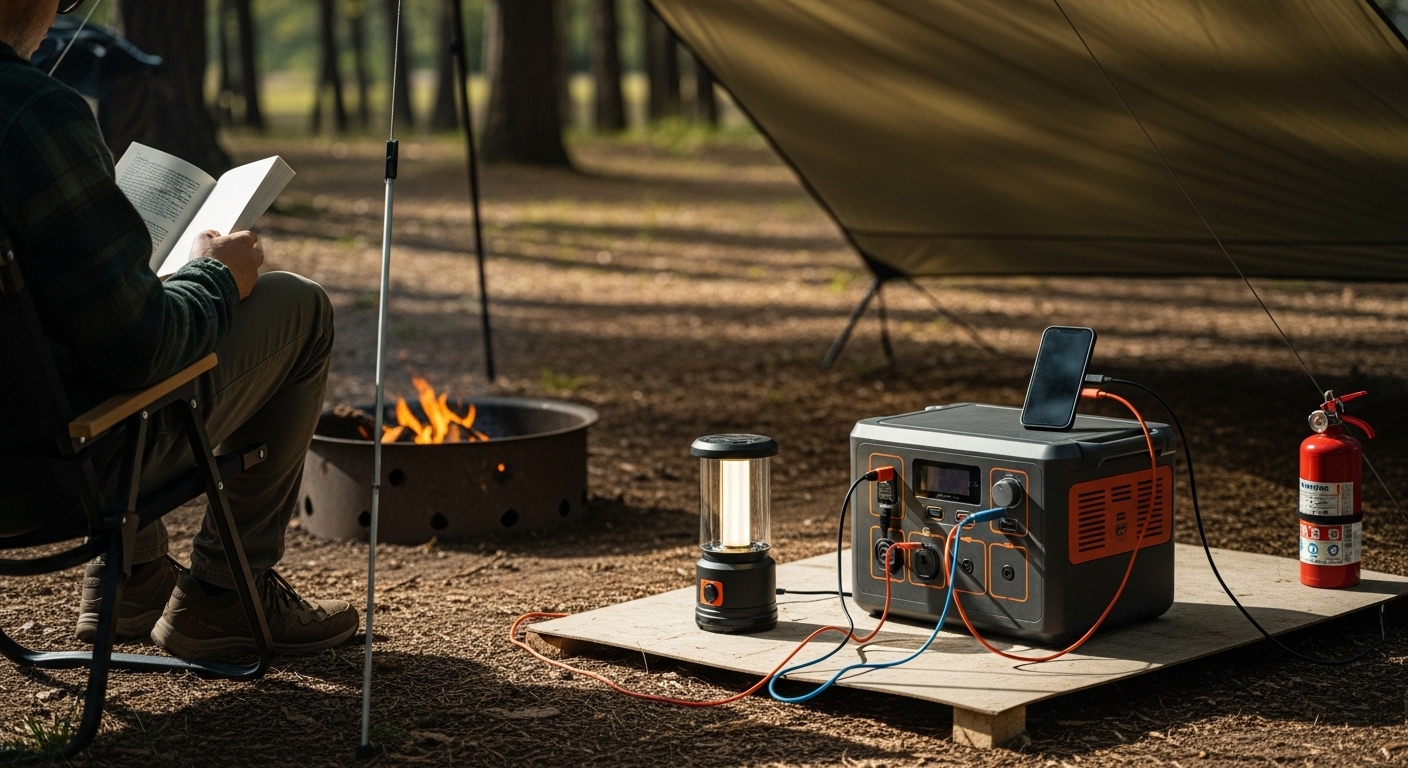
- Raise it off wet ground: place on a dry crate, camp table, or a piece of foam pad.
- Use a drip loop on cables: let cords hang downward before reaching the unit so water drips off before the port.
- Avoid charging in active rain if water can reach outlets/ports.
What NOT to do
- Don’t wrap it tightly in plastic while running (traps heat).
- Don’t place it in a puddle “because it’s on a mat.”
- Don’t use AC outlets with wet hands.
If it gets wet
- Turn it off and disconnect devices.
- Dry the exterior and let it air out fully before using again.
- If water got into ports/outlets, don’t “test it” immediately—wait until fully dry.
6) Safe placement in camp (and inside tents)
- Keep it outside the sleeping area when possible.
- Place it where it won’t be kicked, tripped over, or stepped on.
- Use a short, tidy cable setup—long loose cables become trip hazards at night.
7) Simple safety checklist (30 seconds before you sleep)
- ✅ Station in shade, vents clear
- ✅ Not sitting on wet ground
- ✅ No high-draw AC devices running unattended
- ✅ Enough charge for lights + phone overnight
- ✅ Cables routed to avoid tripping
- ✅ If rain is coming: moved under cover, raised up
Best “camping-safe” way to use one (my real recommendation)
For most campers, the safest and most efficient routine is:
- Daytime: solar/car top-off + charge power-hungry items (laptop)
- Evening: run low draw stuff (lights, phone)
- Night: keep a reserve and avoid leaving AC loads running