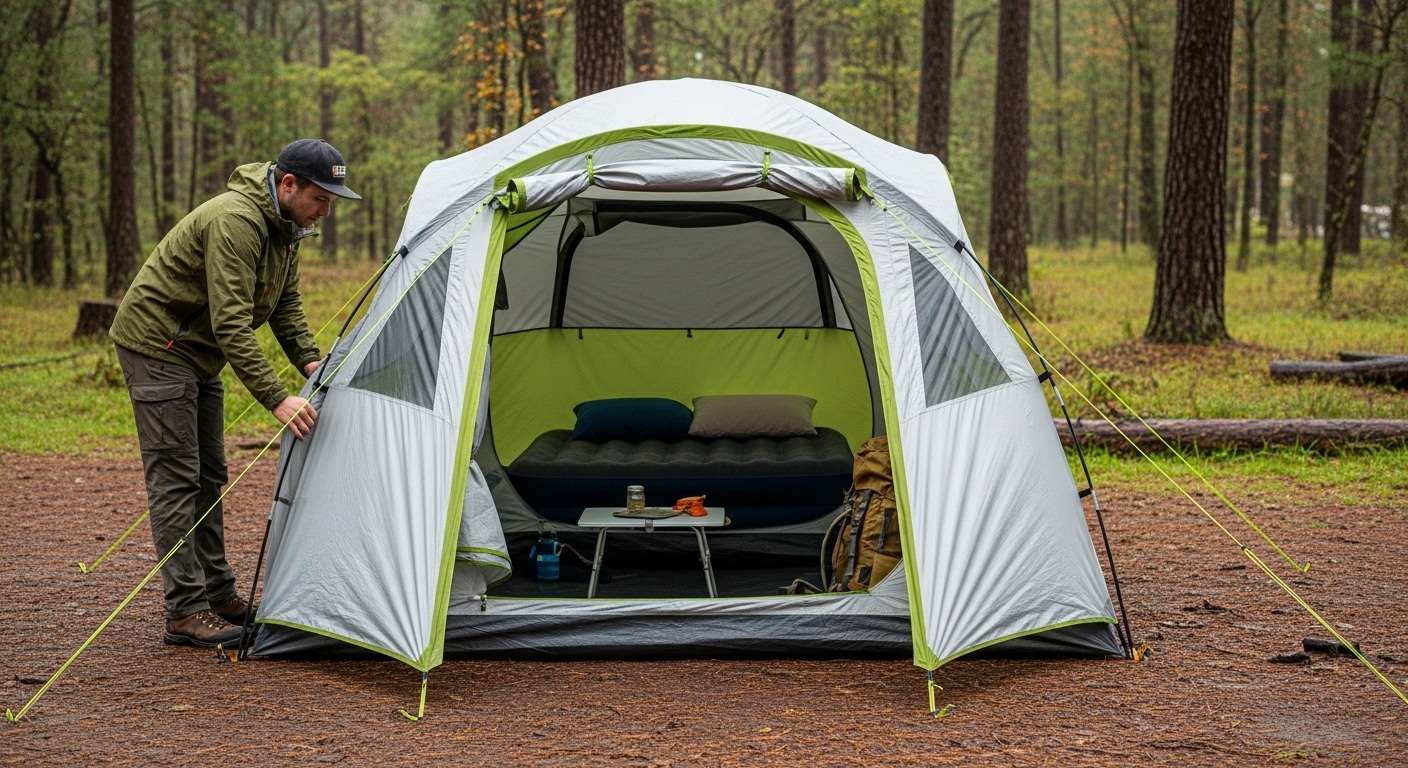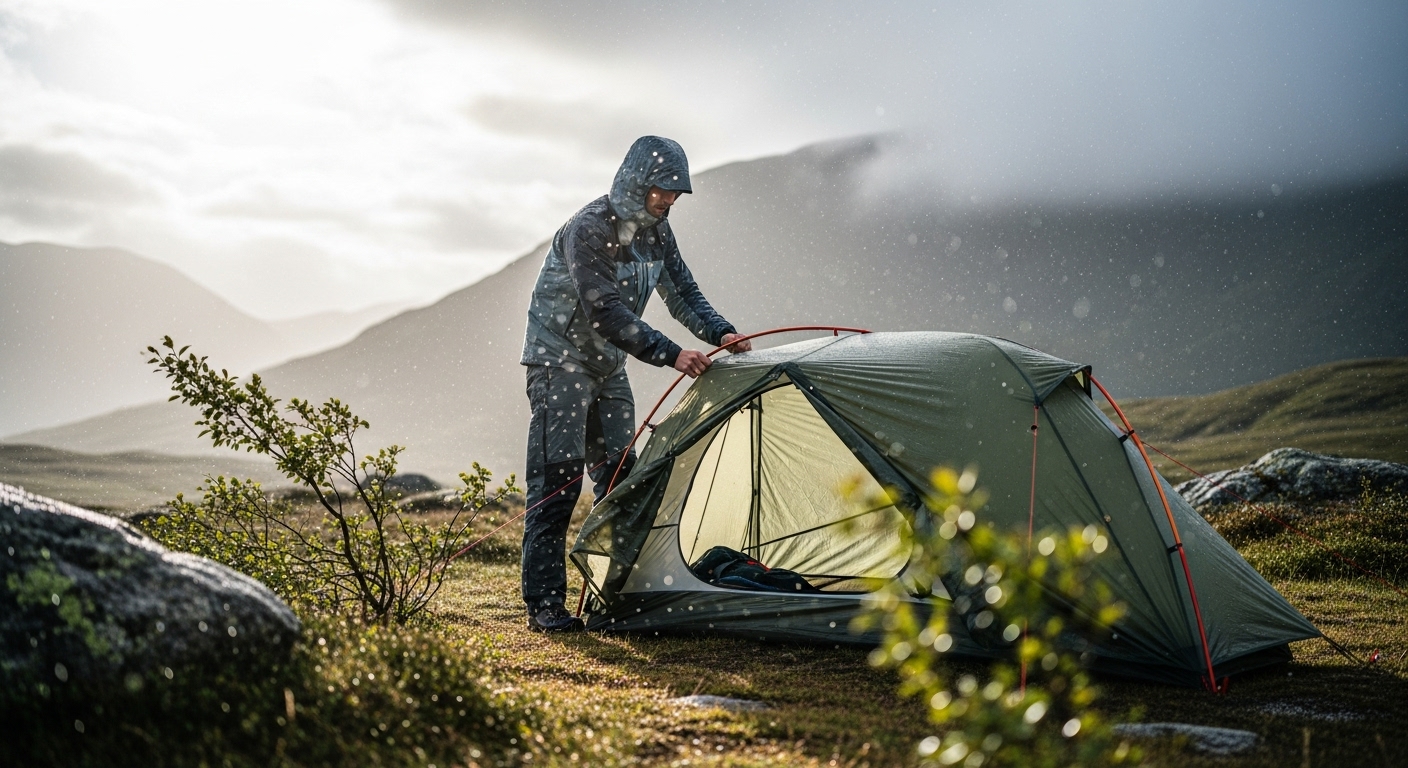
Setting up a tent in wind or light rain is mostly about two things: controlling fabric (so it doesn’t become a sail) and getting water to run off, not in. The fastest campers aren’t rushing—they’re doing a few small steps in the right order.
1) Pick the best spot (even if you’re tired)
- Avoid low bowls where water pools. Look for slightly higher ground.
- Use natural wind breaks: trees, bushes, a rock wall, your car (without camping under dead branches).
- Clear sharp sticks/rocks fast—punctures happen most in “I’ll deal with it later” moments.
Quick rule: if you can, set the tent so the narrow end faces the wind.
2) Lay the groundsheet correctly (the #1 rain mistake)
If you use a footprint/groundsheet:
- Keep it fully under the tent floor—no edges sticking out.
- Any exposed groundsheet acts like a gutter and funnels rain under your tent.
3) Anchor first, build second (wind strategy)
In wind, don’t fully assemble and then chase the tent around.
Fast method
- Lay the tent body down with the door zipped (reduces flapping).
- Stake one corner upwind first.
- Pull the opposite corner tight and stake it.
- Stake the remaining corners to form a tight rectangle.
Now your tent can’t tumble while you add poles.
4) Use poles like a lever, not a wrestling match
- Insert poles while keeping your body upwind as a shield.
- Clip/attach from the upwind side first, then work downwind.
- If it’s really gusty: keep the tent low until the last moment, then “pop” it upright.
Quick trick: once poles are in, immediately re-check corner stakes—wind loosens them fast.
5) Rainfly timing: when to put it on
In light rain
- Get the tent up fast, then fly on immediately.
- If your tent is a “fly-first” or integrated system, follow that design—it’s ideal in rain.
Keep the inner tent dry
If your tent has a separate inner:
- Keep the inner packed until the fly is partially up if possible.
- If that’s not possible, move quickly and avoid leaving doors open.
6) Stakes: how to make them hold in bad ground
Correct angle
- Drive stakes in at about a 45° angle, leaning away from the tent (so tension pulls them deeper).
Use the right stake for the ground
- Soft soil: longer stakes hold better.
- Hard ground: thinner stakes penetrate easier.
- Sand/snow: bury stakes sideways (“deadman”) if needed.
Quick trick: if stakes keep pulling out, place a rock on top of the stake line (not on the tent fabric) for extra hold.
7) Guy lines: your real “storm insurance”
Most people skip guy lines, then blame the tent.
When to use them
- Any noticeable wind
- Cabin tents or tall tents (more sail area)
- Rain + wind together (fly flapping can push water in)
How to set them quickly
- Attach guy lines to fly points.
- Pull them so the fly is tight but not distorted.
- Stake guy lines at a wider angle than corners for stability.
Quick trick: If you only do two, guy out the windward side first.
8) Wind direction: how to aim your tent
- Put the lowest/narrowest end into the wind.
- Keep doors and vents from facing the main wind if possible (reduces water blow-in).
- In shifting wind, prioritize structural stability over perfect door direction.
9) Ventilation in rain (avoid “it leaked” condensation)
In rain, many “leaks” are actually condensation.
- Crack vents/windows on the downwind side.
- Keep the fly tight so it doesn’t touch the inner tent (contact points can transfer moisture).
10) Quick fixes if things go wrong
Tent flapping like crazy
- Tighten guy lines and corners.
- Lower the fly tension evenly.
- Reposition stakes farther out for better angles.
Water starting to creep under
- Check groundsheet edges (tuck them in).
- Make sure the fly reaches low enough and is properly aligned.
- Avoid digging trenches (often not allowed and can make runoff worse).
Stakes won’t hold
- Use rocks as anchors or tie guy lines to heavy objects (logs/rocks).
- In a pinch, “deadman” anchor: bury a stake or stick sideways and tie to it.
60-second “bad weather” setup checklist
✅ Narrow end into wind
✅ Stake 2 corners first (upwind then opposite)
✅ Poles in, then fly on immediately
✅ Tighten corners + fly evenly
✅ Guy out windward points
✅ Tuck groundsheet fully under
✅ Vent downwind to reduce condensation