When you’re heading out for a weekend camp, the “best” lantern isn’t the fanciest one—it’s the one that stays reliable from Friday night through Sunday morning without turning into a battery headache or a dead weight. Here’s an honest, real-use comparison to help you pick the right type.
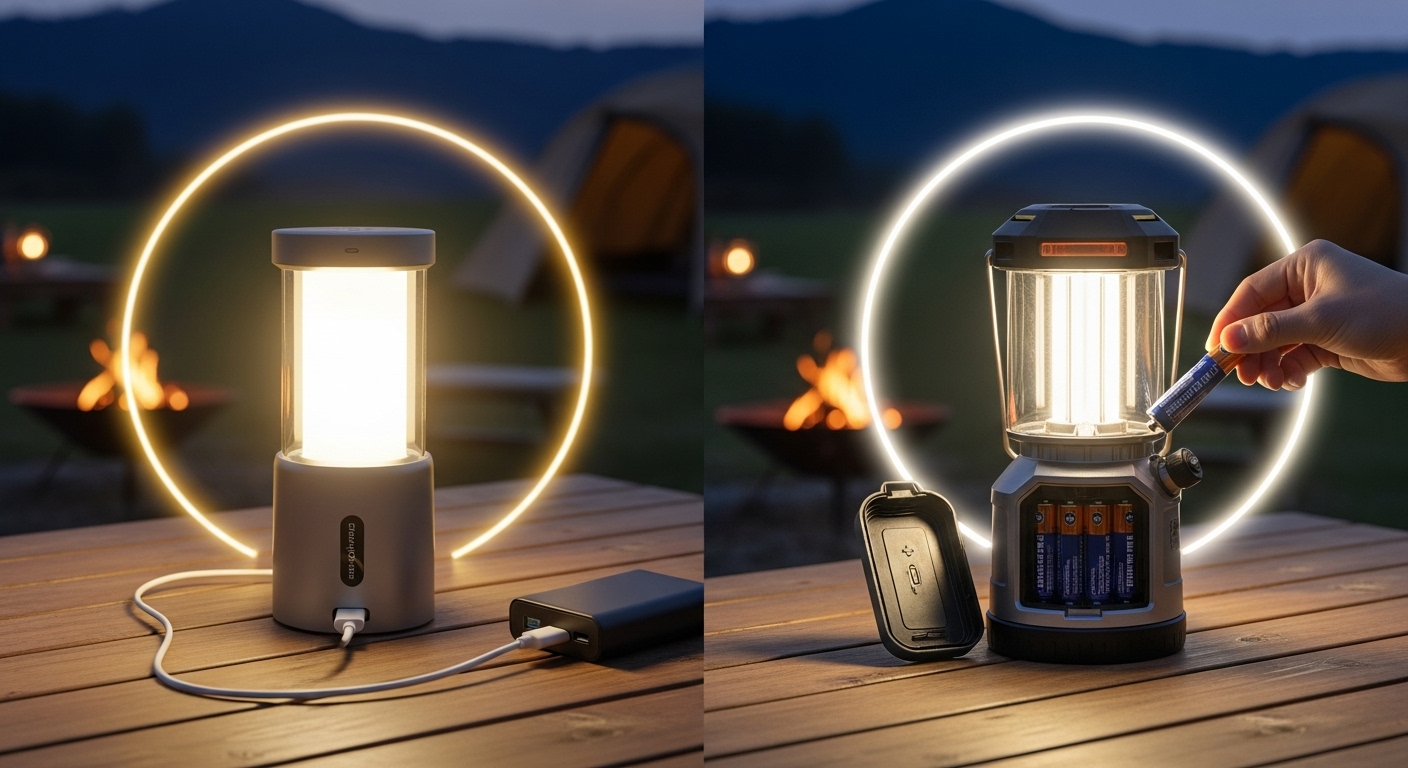
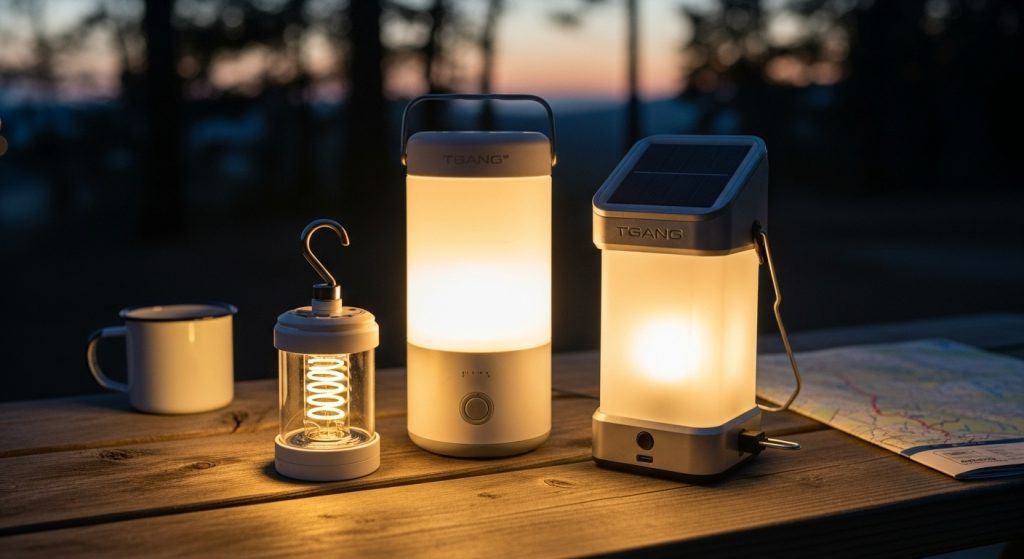
Rechargeable Camping Lanterns
Pros
- Convenient for frequent campers: Charge at home, toss it in the car, done.
- Lower long-term waste: No pile of dead disposables after each trip.
- Consistent brightness (often better regulation): Many rechargeable lanterns hold usable brightness longer before stepping down.
- Extra features are common: USB-C charging, battery indicator, sometimes a power bank for your phone.
Cons
- You can’t “instantly refill” in the woods: If it dies and you don’t have a backup battery/power bank, you’re stuck.
- Cold weather can hit performance: Rechargeables (especially lithium-based) can drain faster in low temps.
- You must remember to charge: The #1 way people lose the game—packing a lantern at 30% and realizing it at night.
Best for
- Car camping + established campsites
- People who camp often and want less hassle over time
- Anyone who values USB-C charging and battery indicators
Battery-Powered Camping Lanterns (Replaceable Batteries)
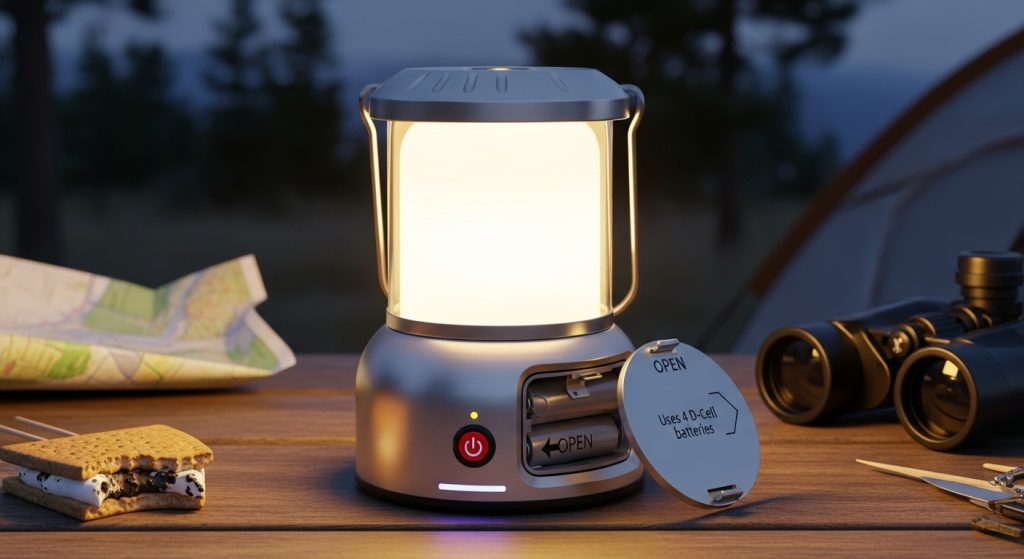
Pros
- Instant backup power: Lantern goes dim? Swap batteries and you’re back at full strength.
- Great for “just in case” reliability: Perfect for families and emergency kits.
- Performs predictably in storage: If you store it right with fresh batteries (or store batteries separately), it’s ready when needed.
- Better for remote trips: No dependence on outlets, power banks, or car charging.
Cons
- You need to carry spares: If you forget extras, you’re worse off than with a rechargeable.
- Ongoing cost + waste: Disposables add up, and dead batteries are annoying to deal with.
- Brightness can drop gradually: Many battery-powered lanterns fade over time rather than staying stable.
- Leak risk if stored with batteries inside: Especially long-term storage—leaks can ruin the lantern.
Best for
- Occasional campers
- Family trips where you want zero surprises
- Emergency preparedness (storms, outages)
Head-to-Head Comparison (Weekend Camping Reality)
1) Reliability from Friday night to Sunday
- Rechargeable wins if you fully charge before leaving and use smart brightness levels.
- Battery-powered wins if you bring spare batteries (because you can “reset” instantly).
2) Convenience
- Rechargeable: easiest when you camp often—charge + go.
- Battery-powered: easiest when you camp rarely—store spares, no charging routine.
3) Brightness + “usable light”
- Rechargeables often feel better because they can maintain steady brightness longer.
- Battery-powered models can start bright but fade as batteries drain (varies by model).
4) Weight and packing
- Rechargeables can be heavier for the same brightness due to built-in batteries.
- Battery-powered lanterns can be lighter initially—but spare batteries add weight.
5) Backup plan
- Rechargeables need a backup strategy: power bank, car charger, or a second light.
- Battery-powered lanterns are their own backup if you pack extra batteries.
The Optimal Choice for Most Weekend Campers
For a typical 2-night weekend camping trip, the most practical “optimal” setup is:
✅ Go Rechargeable if you camp more than a few times a year
Pick rechargeable and follow one rule:
Charge it to 100% the day before you leave, and use medium mode as your default.
This gives you stable light, less waste, and easier long-term ownership.
✅ Go Battery-Powered if you camp occasionally or want maximum fail-safe reliability
If you’re the type who camps once in a while—or you’re packing for a family and want the safest option—battery-powered is hard to beat, as long as you bring spare batteries.
My Straight Answer (Best Single Choice)
If I had to choose one for weekend camping for most people:
Rechargeable lantern (with a simple backup plan).
It’s more comfortable to live with, often delivers better usable brightness, and avoids the “do we have enough batteries?” problem.
But if you’re the forgetful type, or you’re building an emergency kit where it must work after sitting for months:
Battery-powered wins.
Quick “Don’t Regret It” Tips
- Use medium brightness most of the time—max mode drains anything fast.
- Bring a backup light (a headlamp is perfect).
- If you choose battery-powered: store batteries separately to avoid leaks.
- If you choose rechargeable: charge the lantern the night before, not the morning you leave.