Solar charging while camping sounds simple—until you try it under tree cover, cloudy skies, or a campsite that only gets sun for two hours a day. The truth is: solar can work really well, but only if you pick the right type of charger and use it the right way.
Below are four standout options that are popular with campers, with honest notes on shade performance, cloudy-day reality, and what you can actually expect at camp.
The real-world rule (so you don’t get disappointed)
Most small “solar power banks” charge slowly from the sun. Their best feature is often that they’re good power banks—and the solar panel is a backup.
If you want meaningful solar charging, a foldable panel usually works better than tiny built-in panels.
1) BLAVOR Solar Power Bank (10,000mAh, Wireless Charging, USB-C Fast Charging)
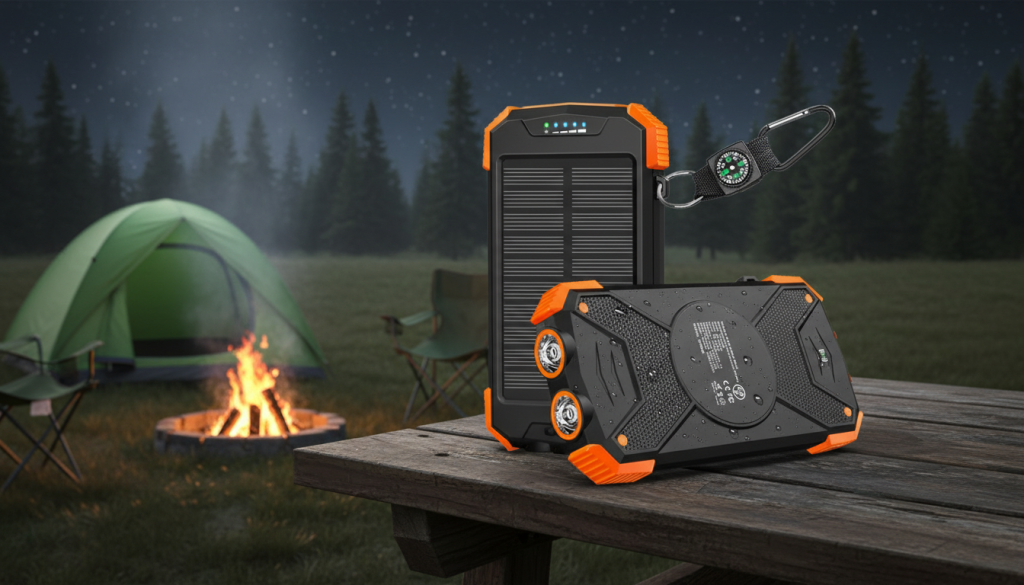
What it is
A compact solar power bank with wireless charging and USB-C fast charging. This is the “carry it every day + bring it camping” style.
Real-world performance
- In shade/clouds: Solar trickle charging is minimal—think “backup,” not “refill.”
- In good sun: Better, but still slower than plugging into a wall or car.
Pros
- Great as a regular power bank first
- Wireless charging is convenient at camp (when it works well with your phone case)
- Good size/weight for short trips
Cons
- Don’t expect the sun to fully recharge it quickly
- Wireless charging can be less efficient than cable (uses more battery)
Best for: weekend camping, emergency backup, people who want a solid power bank with solar as a bonus.
2) SOARAISE High-Capacity Solar Power Bank (Built-in Cables + Multiple Solar Panels)
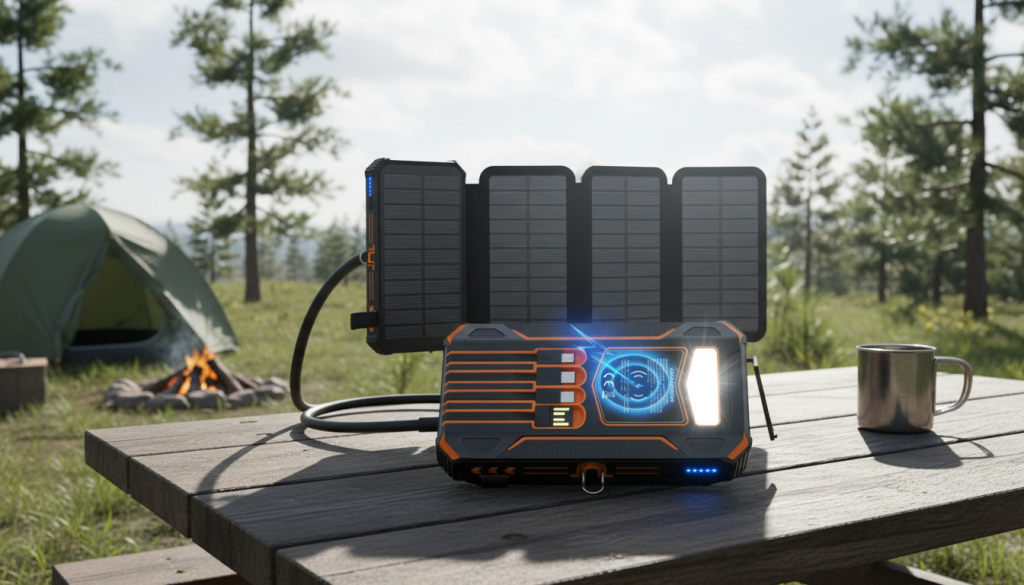
What it is
A bigger, heavier solar power bank with built-in cables and a multi-panel solar face. The big draw is capacity + convenience.
Real-world performance
- In shade/clouds: Still slow, but the bigger battery means you can carry more stored power.
- In sun: The larger solar surface helps more than tiny single-panel banks, but it’s still not the same as a foldable panel.
Pros
- Built-in cables = fewer things to forget
- Large stored power is helpful for multi-day trips
- Works well as a “base camp battery”
Cons
- Bulkier and heavier in a backpack
- Solar recharging is still “slow but steady,” not fast
Best for: car camping, family trips, long weekends where you want a big battery reserve.
3) Rugged Solar Power Bank (High Capacity, USB-C In/Out, Dual Flashlights)
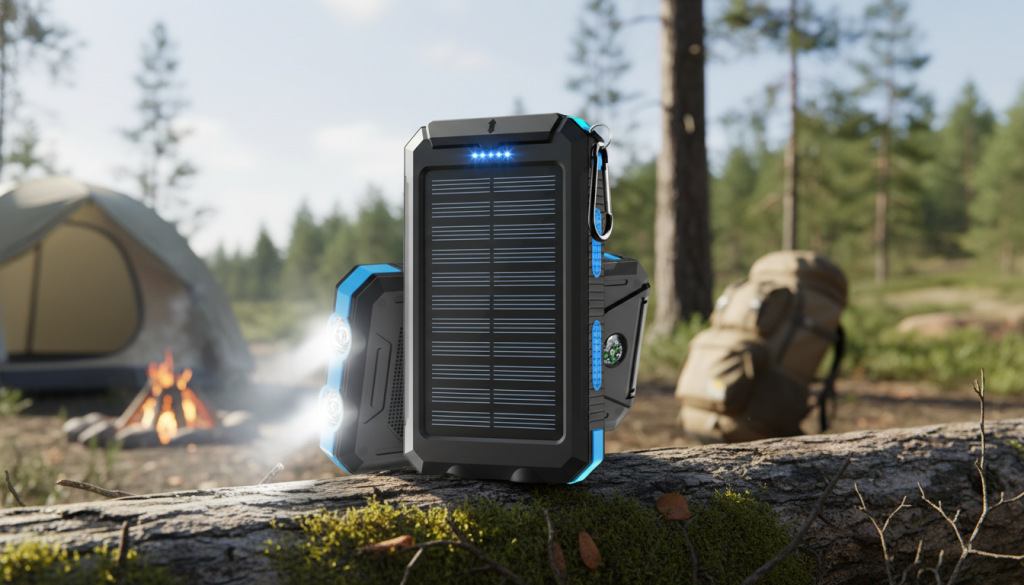
What it is
A rugged-style solar power bank with USB-C input/output and built-in flashlight. This is the “outdoor-ready” design many campers like.
Real-world performance
- In shade/clouds: Expect slow trickle.
- In sun: Enough to top off slowly, but best used as a battery you charge before the trip.
Pros
- Durable build for camping gear bins
- USB-C in/out is useful for modern devices
- Built-in light can help in emergencies
Cons
- Flashlights on power banks are usually “okay,” not a replacement for a real lantern/headlamp
- Solar is still not the fastest way to refill
Best for: mixed use (camping + emergency kit), people who want a tougher power bank.
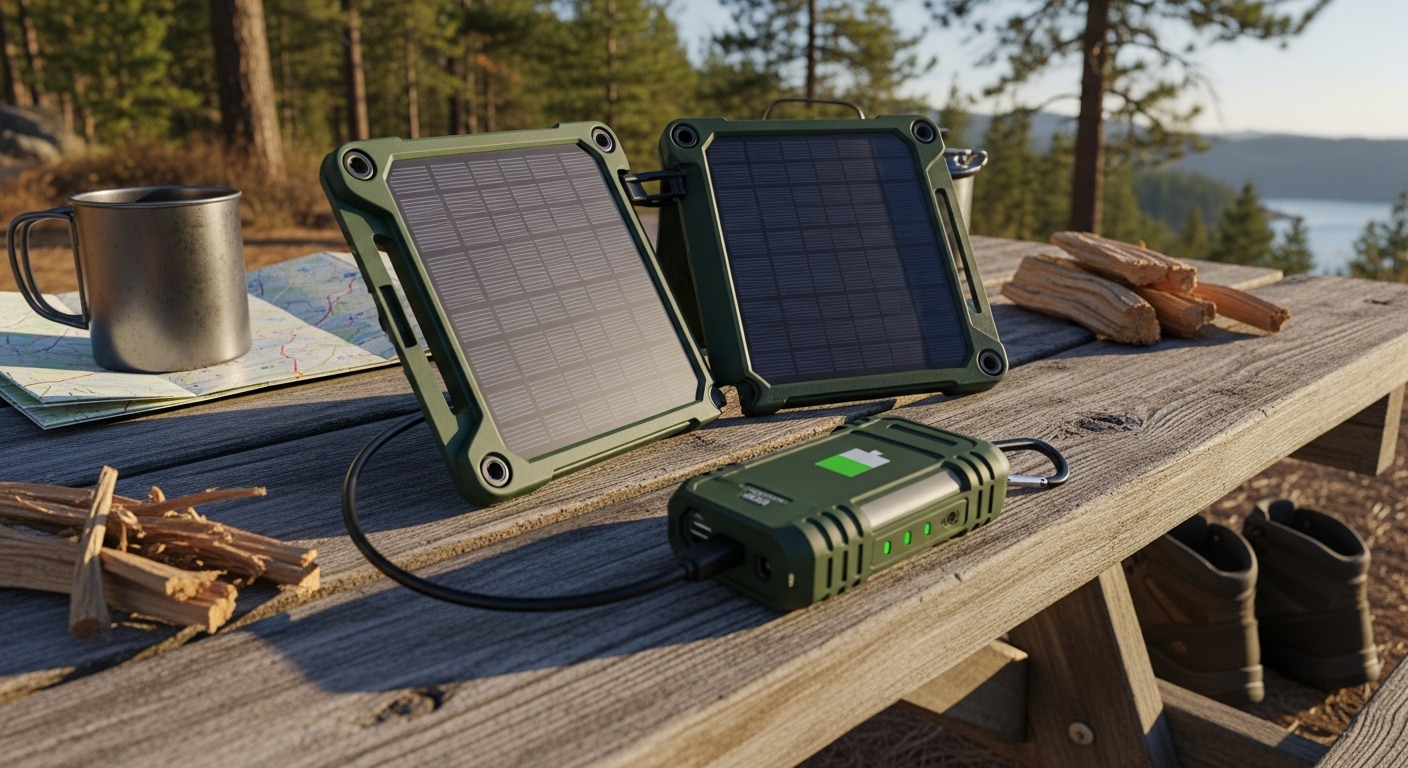
4) BLAVOR Foldable Solar Panel (10W, USB-A Outputs, Water-Resistant)
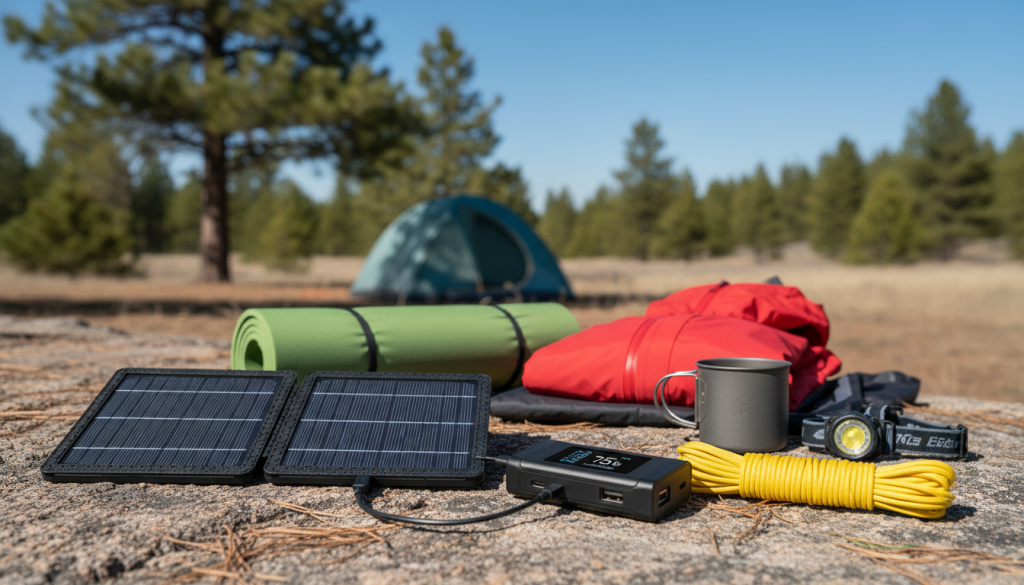
What it is
A foldable solar panel (not a power bank). This is the category that usually performs best for actual solar charging.
Real-world performance
- In shade/clouds: Output drops hard (all solar panels do), but it’s still typically more effective than tiny built-in panels.
- In sun: Much better. This is the one that can realistically charge devices during the day.
Pros
- Better real solar output than most power banks with built-in panels
- Great for camp chairs / backpacks / tent line drying area where it can catch sun
- Pairs well with a power bank (charge the bank during the day, use power at night)
Cons
- You’ll need to manage placement (angle + sunlight matters a lot)
- Best results often come from charging a power bank, not charging a phone directly
Best for: people who actually want to rely on solar, longer trips, base camp setups.
Quick comparison: what works best in real campsites?
- Best “actual solar” choice: #4 Foldable Solar Panel
- Best compact all-around power bank: #1 BLAVOR 10,000mAh
- Best for big battery reserve: #2 SOARAISE high-capacity
- Best rugged emergency kit option: #3 rugged solar power bank
My honest optimal pick
Best Overall for Camping: #4 Foldable Solar Panel (paired with any decent power bank)
If you’re camping more than a night or two, this setup wins:
- Panel charges your power bank during sunny windows
- Power bank runs your phone/headlamp at night
- Less stress than hoping a tiny panel will refill a big battery
How to actually get solar charging to work (shade + clouds included)
1) Chase sun windows, not “all day sun.” Even 1–2 good sun hours can help if your panel is positioned well.
2) Angle matters. Tilt toward the sun—flat on a table is usually worse.
3) Charge a power bank first. Phones charge better from stable power than changing solar output.
4) Keep it cool. Don’t bake your phone/power bank in direct heat while charging.
5) Expect reduced output on cloudy days. Plan for “top-offs,” not full refills.